- Canada Updates :- Canada plans to welcome 900,000 international students by 2023, with India as the top source country. This is an increase from the current target of 600,000 international students. The government is targeting India because it is the largest source of international students for Canada.
- Australia Updates :- The Australian government has announced that it is streamlining the visa processing system for international students. This means that students can expect their visas to be processed more quickly. Moreover, The Australian government has increased the number of scholarships available to international students. The new scholarships are worth up to AUD$20,000 each.



Australia Student Visa Update 2026: Major Change in Evidentiary Levels for South Asian Countries
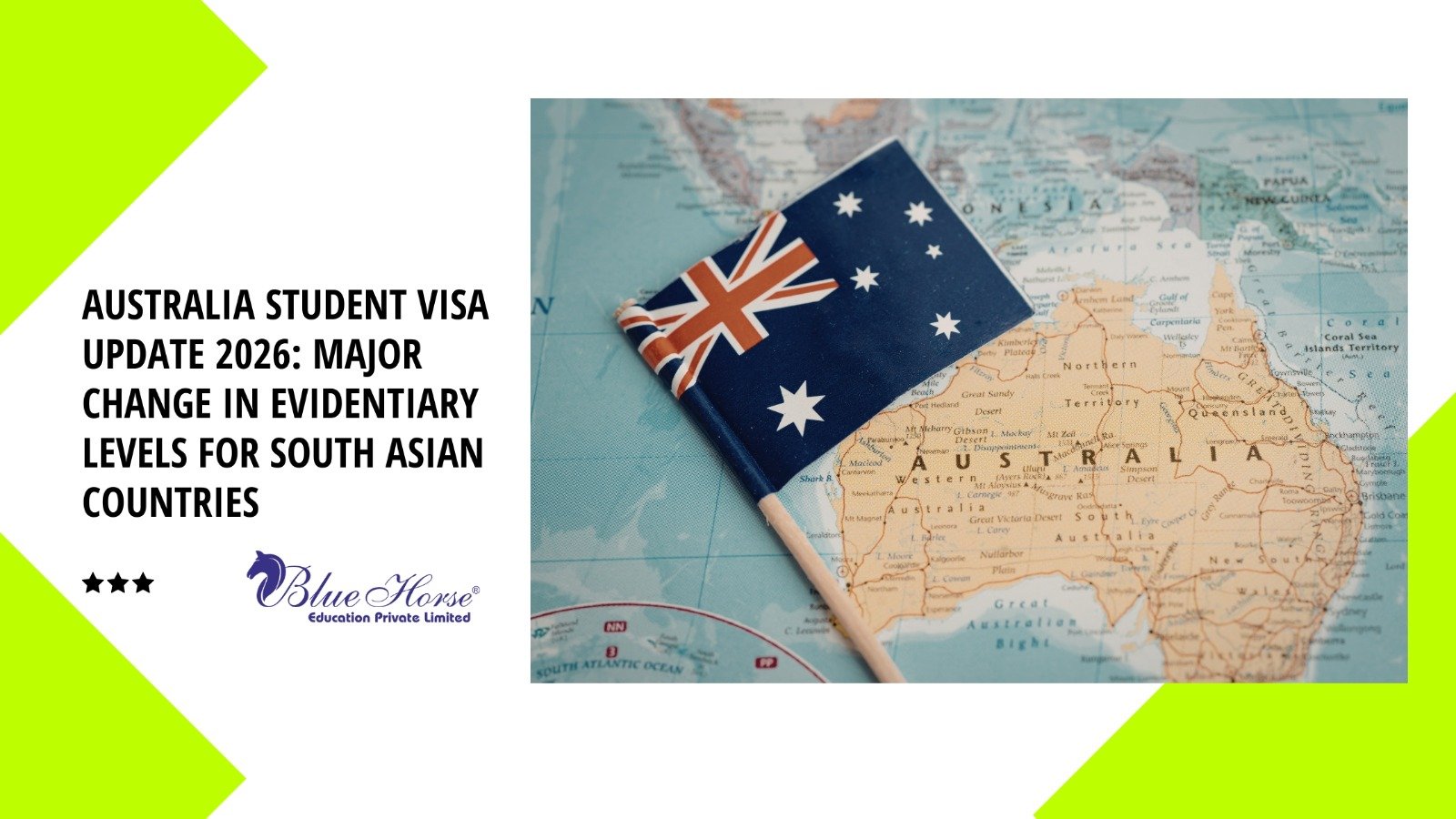
Australia Student Visa Update 2026: Major Change in Evidentiary Levels for South Asian Countries
Australia has recently made a major change to its student visa assessment system, updating the Evidentiary Levels (AL) for several countries, including India, Nepal, Bangladesh, and Bhutan. These updates are part of the Australian Government’s effort to improve the integrity and transparency of its student visa process.
If you are planning to study in Australia in 2026, this update is extremely important to understand. It affects how your student visa will be assessed, the documents you’ll need to provide, and even your overall visa approval chances.
Let’s break down what has changed, why it happened, and what it means for you as an international student.
What Are Evidentiary Levels (AL)?
The Evidentiary Level (AL) is the risk rating that the Australian Department of Home Affairs assigns to each country and education provider.
It determines how much evidence a student must show when applying for a student visa.
In simple words:
-
Lower AL (Level 1) = lower risk, fewer documents needed.
-
Higher AL (Level 3) = higher risk, more documents required.
This means if your country moves to a higher level, you will now need to submit stronger proof of English proficiency, financial capacity, and genuine student intent.
New Evidentiary Levels for 2026
As per the latest update:
-
🇮🇳 India – Level 3
-
🇳🇵 Nepal – Level 3
-
🇧🇩 Bangladesh – Level 3
-
🇧🇹 Bhutan – Level 3
-
🇱🇰 Sri Lanka – Level 2
-
🇵🇭 Philippines – Level 3
-
🇻🇳 Vietnam – Level 2
-
🇲🇾 Malaysia – Level 1
-
🇮🇩 Indonesia – Level 1
This means students from India, Nepal, Bangladesh, Bhutan, and the Philippines will now face stricter document requirements during their visa application process.
Why Did These Changes Happen?
The shift to higher Evidentiary Levels happened after Australian authorities observed a rise in visa refusals and fraudulent documentation.
In recent months, many education agents and sub-agents had been promoting false promises, such as:
-
“No English test required”
-
“No financials needed”
-
“Guaranteed visa”
These misleading claims encouraged applications that did not meet the genuine student criteria.
As a result, visa refusal rates increased sharply, and Australia decided to reclassify these countries to AL3, which means more scrutiny on every application.
This change is meant to protect genuine students and maintain the integrity of Australia’s international education system.
What Does AL3 Mean for Indian and South Asian Students?
Being at Evidentiary Level 3 means the visa process will become more document-intensive and selective.
Here’s what students must now be prepared for:
1. English Language Proof Is Mandatory
You will now need to provide a valid IELTS, PTE, or TOEFL score.
Students applying with “No English” will face almost certain refusals.
Blue Horse Education strongly advises students to meet or exceed the minimum English score required by their chosen university or college.
2. Financial Documents Are Compulsory
You must show clear proof that you or your sponsor can afford:
-
Tuition fees
-
Living expenses
-
Travel and other costs
This includes bank statements, income proofs, and affidavits of support.
Earlier, many agents submitted incomplete or fake financials, leading to major integrity issues. The new rule ensures only genuine students with genuine funding are approved.
3. Genuine Student (GS) Checks Are Stricter
The Genuine Student requirement now replaces the old “Genuine Temporary Entrant (GTE)” format.
Students will be assessed on:
-
Their study plans and career goals
-
Financial and academic preparedness
-
Whether the course is relevant to their background
This means your Statement of Purpose (SOP) and overall application must be honest, consistent, and convincing.
Impact on Education Agents and Students
This decision has sent a strong message to education agents and consultants:
Australia wants integrity, not manipulation.
For years, some agents misled students with false promises like “no English” or “quick visa without financials.” These unethical practices have damaged the reputation of entire countries — including India and Nepal — in Australia’s migration system.
As a result, many genuine students are now facing stricter checks because of others’ dishonest actions.
The Australian Government hopes this move will restore honesty and quality in international education, ensuring that students who truly want to study and build their careers in Australia are given fair opportunities.
What Students Should Do Now
Here’s how you can prepare for your Australian student visa under Level 3:
✅ Take your English test seriously – Prepare well for IELTS, PTE, or TOEFL.
✅ Organize your financials early – Ensure your bank statements, income proofs, and sponsor documents are ready.
✅ Choose genuine, reputed institutions – Avoid small or unlisted colleges with weak visa success rates.
✅ Write a strong, honest SOP – Clearly explain your study goals, background, and career plans.
✅ Work only with licensed education counselors – Genuine consultants like Blue Horse Education help you apply the right way, not the easy way.
Final Thoughts
The recent Evidentiary Level changes are a reminder for both students and agents that honesty and transparency matter most.
While the shift to Level 3 may make the visa process tougher, it also creates an opportunity for genuine students to stand out.
At Blue Horse Education, we believe this change will lead to a stronger, fairer system where only true students with real intentions are rewarded.
If you are planning to study in Australia in 2026 and want expert guidance through the new AL3 visa process, our experienced counselors are here to help you every step of the way — from course selection to visa filing.
Stay genuine. Stay prepared.
For personalized support and honest guidance, contact Blue Horse Education today.
🌐 Visit: www.bluehorseedu.com
📞 Book your free counseling session now!
QUICK LINKS
OUR SERVICES